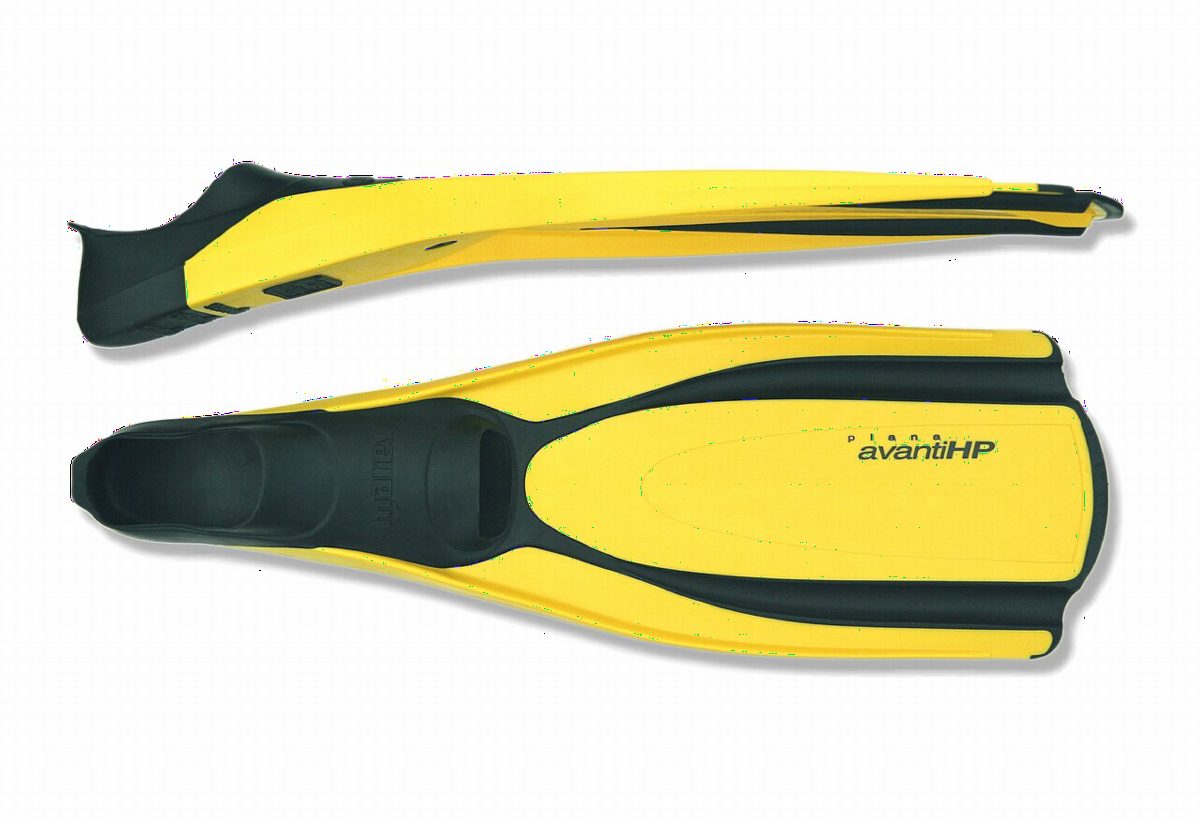
Fins Essential
Long fins
Your engine. Long blades in a closed foot pocket, and the pocket matters more than the blade.
Fins Essential
Your engine. Long blades in a closed foot pocket, and the pocket matters more than the blade.
Prices read on 17 October 2026 from Moroccan online shops. Brands named are examples seen for sale, not a recommendation, and prices change: check before you buy. For second-hand, also look on Avito and in spearfishing groups.
All gear prices in Morocco →Fins turn leg strength into distance and depth. Spearfishing fins are long, 80 to 90 cm from heel to tip, because a long blade moves more water per kick at a slow, relaxed cadence, and slow relaxed kicking is what saves oxygen. Short scuba fins work you hard and get you nowhere on a breath.
A good pair gets you to the bottom with the least effort, holds you against a current, and brings you up with a fish without burning the oxygen you need to reach the surface. A bad pair does the opposite, and the difference is felt on every single dive.
The foot pocket first. A blade is only as good as the pocket that transfers your kick into it. The pocket must hold your foot firmly over the instep and around the heel with no play, without crushing the toes or cutting into the ankle. Try them on with the socks you will dive in, because a 3 mm sock changes a whole size.
Then the blade:
Stiffness should match your legs and your weight: a heavy or strong diver takes a medium blade, a light diver a soft one. Too stiff tires the legs and cramps the calves; too soft wastes the kick. When in doubt, softer.
Blades held in the pocket by rails and a screw can be replaced separately from the pocket, which is worth having: pockets last years, blades do not.
Fin pockets run in double sizes and vary between brands. Fit with your dive socks on: firm over the instep, heel seated, toes touching the end without curling. A pocket that is loose will blister your heel and lose power; one that is tight will cramp your foot in cold water. If you are between sizes, take the larger pocket and a thicker sock.
Rinse the pockets inside and out; sand in a pocket is sandpaper on your skin. Store fins flat or hanging by the pocket, never standing on the blade tips, and never in a hot car. Plastic blades take a set if they are bent in storage. Check the screws holding the blades before each season.