Spearguns and spears Worth having
A shaft, a rubber loop and your hand. The oldest tool, the cheapest, and the one that teaches you to get close.
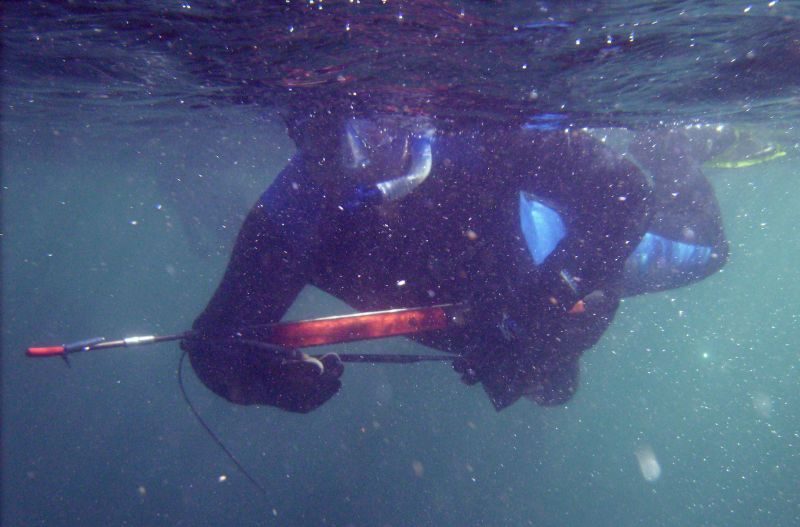
A pole spear is a two-metre shaft with a loop of rubber at the back end. You stretch the loop over your hand, hold the shaft at the front, and let go: the rubber drives it forward a metre or so. There is no trigger, no line, no reel, and no range to speak of.
That is the point. A pole spear only works on a fish within arm's reach, so it forces the diver to learn stillness and approach, and it is a fine tool for octopus, for fish in holes, and for anyone who wants to start without spending on a gun. It is also quiet, and in thick surge or a cave it can be handier than any gun.
What matters:
A pole spear does not replace a gun for a spearo who hunts seabass and dentex. It is a second tool, a first tool, or the right tool for a specific job.
Two metres for a start. Cut the rubber loop so that it is stretched hard but not fully at full extension of the arm.
Rinse, check the joints between sections for corrosion and grit, replace the rubber each season, keep the tip sharp.
Band speargun
A barrel, a trigger, rubber bands and a shaft. The simplest reliable tool for the job, and the one to learn on. Length is the only real decision.
Roller speargun
A band gun with pulleys at the muzzle, so the band pulls the shaft along the whole barrel. More power from a shorter gun, and less recoil, for a diver who already shoots well.
Pneumatic speargun
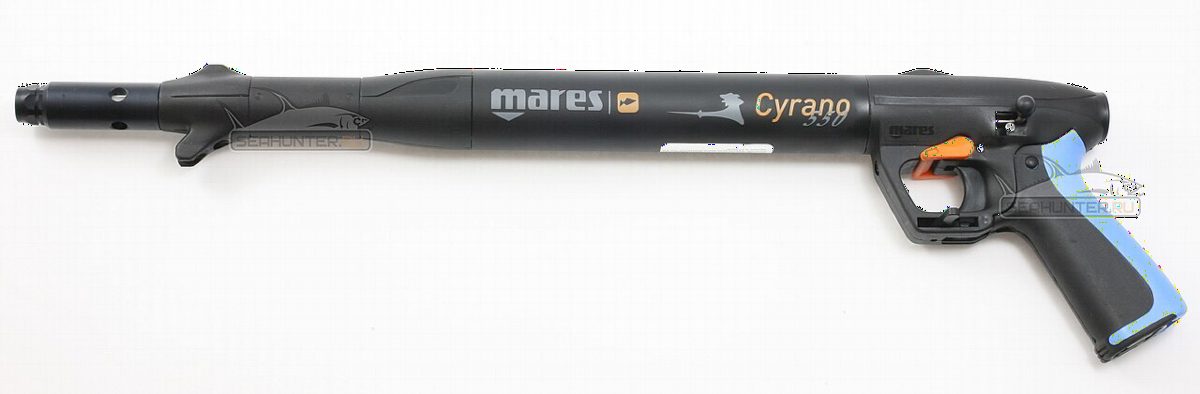
Compressed air instead of rubber. Compact, powerful for its length, and the traditional gun of the Mediterranean hole hunter.
Shafts and tips
The part that actually holds the fish. Diameter, tip and the notches that catch the band decide whether a hit is a fish or a scar.