Weighting Essential
Rubber weight belt
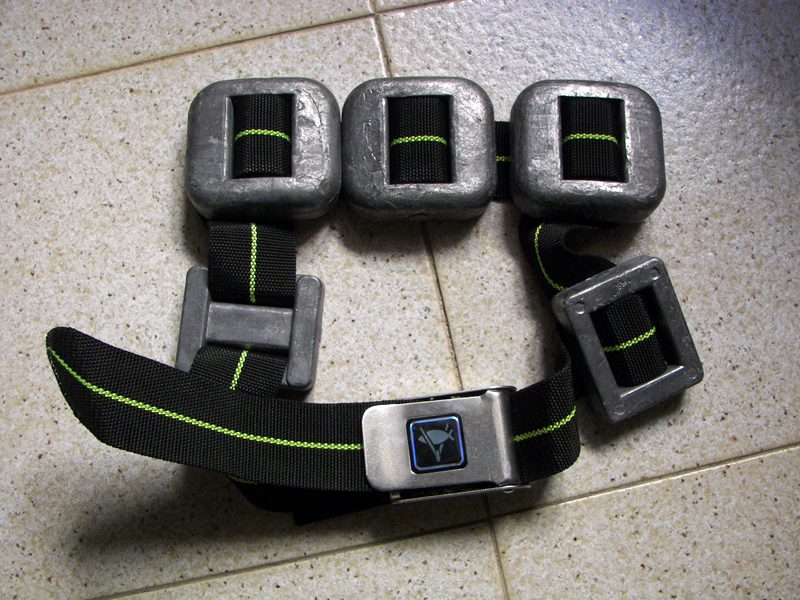
A stretchy rubber belt with a quick-release buckle. It has to stay on your hips at depth and come off with one hand at the surface.
Weighting Essential
A stretchy rubber belt with a quick-release buckle. It has to stay on your hips at depth and come off with one hand at the surface.
The belt carries the lead that cancels the buoyancy of the wetsuit, so that you can leave the surface without fighting and hold the bottom without effort. It also has to let go of you instantly if you need to drop it, which is why the buckle is the most important part.
The belt is rubber, not nylon, because the suit compresses as you descend and a nylon belt that was tight at the surface hangs loose and slides to the chest at 15 m. Rubber stretches and stays where you put it.
A belt of thick, wide, elastic rubber, 4 to 5 cm wide, with a metal or stiff plastic quick-release buckle: a Marseillaise-style buckle that opens with one pull, or a similar quick-release. Avoid any buckle that needs two hands or a look to open.
What matters:
Some divers move part of their lead to a neck weight or a weight vest, which puts the diver in a better horizontal position on the bottom and takes the load off the lower back. That is a refinement for later; the belt comes first.
Cut to length. The belt goes on last, over the suit and the beaver-tail, low on the hips and tight enough that it does not move when you invert to descend. Tighten it after a few minutes in the water, once the suit has compressed a little, and again at the deepest part of the session if you go deep.
Rinse, dry out of the sun, and inspect the buckle holes for cracks. Rubber perishes: a belt that has gone stiff or shows surface cracks is replaced, not trusted.