Weighting Essential
Lead weights
How much lead, and where. The single adjustment that decides whether you are safe at the surface and comfortable on the bottom.
Weighting Essential
How much lead, and where. The single adjustment that decides whether you are safe at the surface and comfortable on the bottom.
Lead cancels the suit's buoyancy. Too little and you fight to get down and cannot hold the bottom; too much and you sink like a stone, work to stay up, and are dangerously heavy in the last metres of the ascent, which is where blackouts happen.
The rule most freediving instructors teach is to be neutral at about 10 m for a diver working 10 to 20 m, and neutral around 5 m for shallow work in the surge. Neutral at 10 m means positive at the surface and in the top few metres: a diver who loses consciousness there floats.
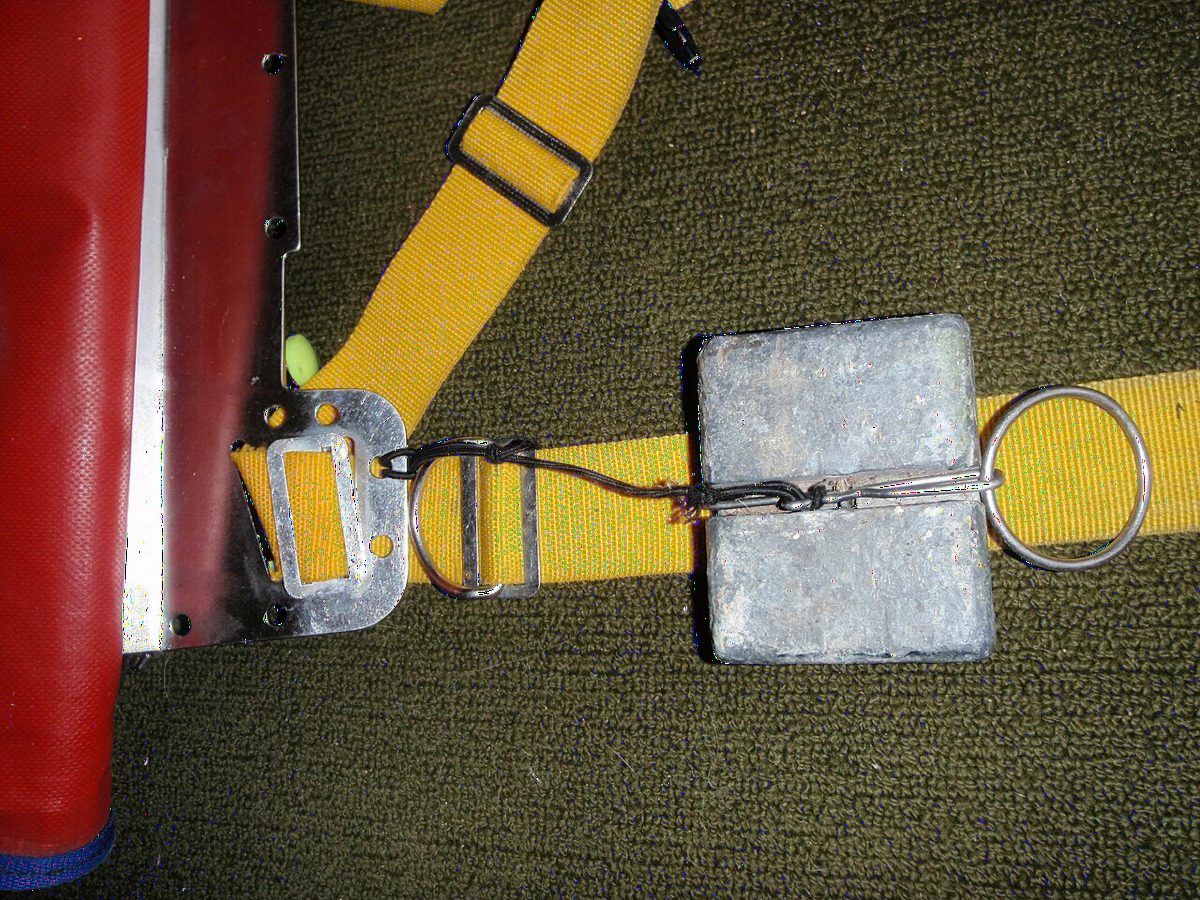
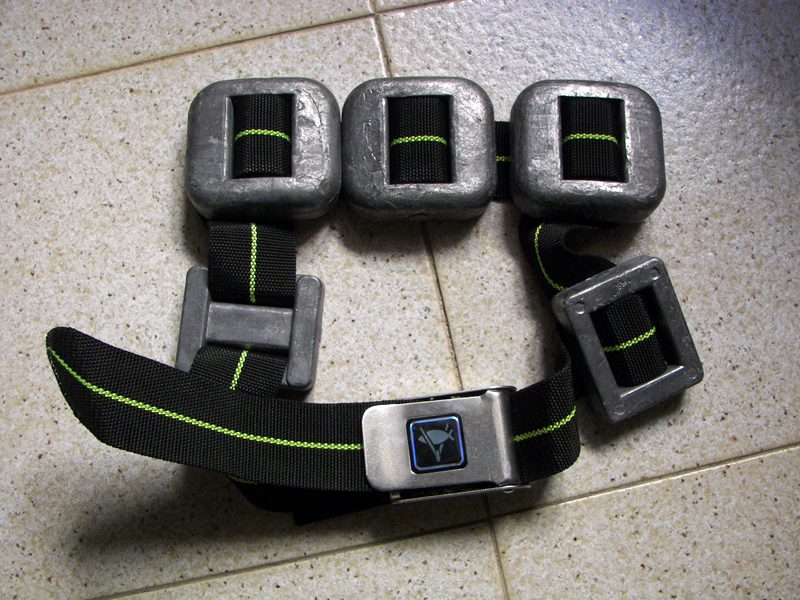
Weights are made for the belt: curved lead blocks with two slots that slide onto a rubber belt, in 0.5, 1 and 2 kg. Small blocks spread round the belt sit better than two big ones, and let you adjust by half a kilo.
How much to start with, for a 5 mm two-piece suit in seawater: roughly 1 kg per millimetre of suit thickness for an average build, so 4 to 6 kg, then adjust in the water. A 3 mm suit needs 2 to 4 kg; a 7 mm, 6 to 9 kg. Body fat, lung volume and the suit's age all change the figure, which is why you test rather than calculate.
The test: at the surface, with a full breath, lying still, you should float with the water at eye level and sink slowly when you exhale. At 10 m you should hover. If you have to kick to stay down at 10 m, add half a kilo; if you sink without effort at 5 m, take some off.
Coated or rubber-covered lead is quieter on rock and kinder to the suit; bare lead is cheaper and works. Soft lead shot in pouches is comfortable but the pouches tear.
Spread the lead around the belt, most of it at the back and sides, none at the front where it stops you bending. Keep a spare half-kilo in the bag: a new suit needs more lead than an old one, and salt water more than the brackish water of a lagoon.
Rinse the salt off. Check that the slots have not cracked; a block that slides freely on a wet belt will slide off in surf.