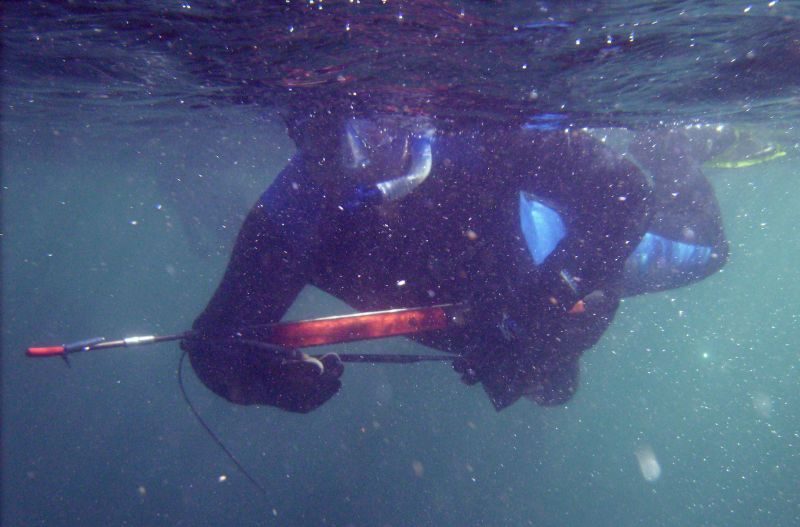
Spearguns and spears Essential
The part that actually holds the fish. Diameter, tip and the notches that catch the band decide whether a hit is a fish or a scar.
The shaft is a steel rod, 6 to 8 mm thick and a little longer than the gun, with a tip that penetrates and a flopper or barb that stops the fish sliding off. It carries the shooting line to the gun or the reel. Everything about the shot ends here: a shaft that is too thin for the bands bends and misses; a tip that is blunt bounces off a scaled shoulder; a flopper that sticks shut lets the fish tear free.
A spearo carries spares. Shafts bend on rock, tips dull, floppers break, and a session ends when the last shaft does.
Diameter:
Tip:
The rest:
Sharpen the tip. A blunt tip on a scaled fish is the commonest cause of a lost one.
Match the shaft to the gun: the length the maker specifies, the diameter the bands can push. One rule of thumb: one 16 mm band per 6.5 mm of shaft on a short gun; two 16 to 18 mm bands for 7 mm on a long one.
Rinse, dry, check for bends by rolling it on a flat surface, and straighten small bends by hand over a knee or a rail. Keep the tip sharp with a file, from the base of the point towards the tip, keeping the original angle. Oil the flopper pivot. Retire a shaft that has bent and been straightened more than twice.
Band speargun
A barrel, a trigger, rubber bands and a shaft. The simplest reliable tool for the job, and the one to learn on. Length is the only real decision.
Roller speargun
A band gun with pulleys at the muzzle, so the band pulls the shaft along the whole barrel. More power from a shorter gun, and less recoil, for a diver who already shoots well.
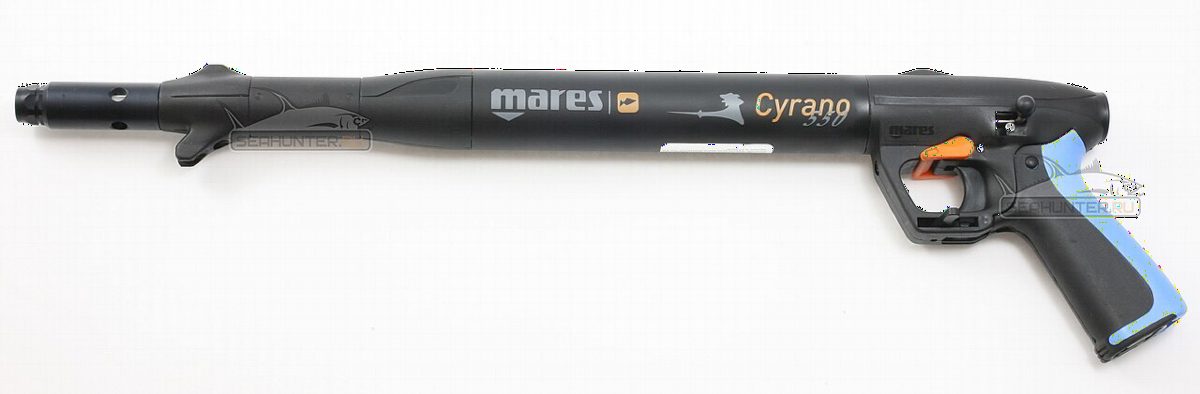
Pneumatic speargun
Compressed air instead of rubber. Compact, powerful for its length, and the traditional gun of the Mediterranean hole hunter.
Bands and wishbones
The rubber that powers the gun and the wishbone that catches the shaft. Consumables, replaced every season, and the easiest upgrade there is.