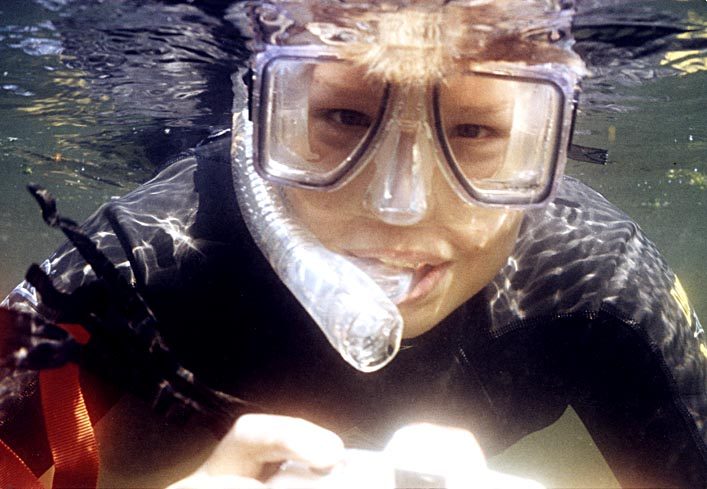
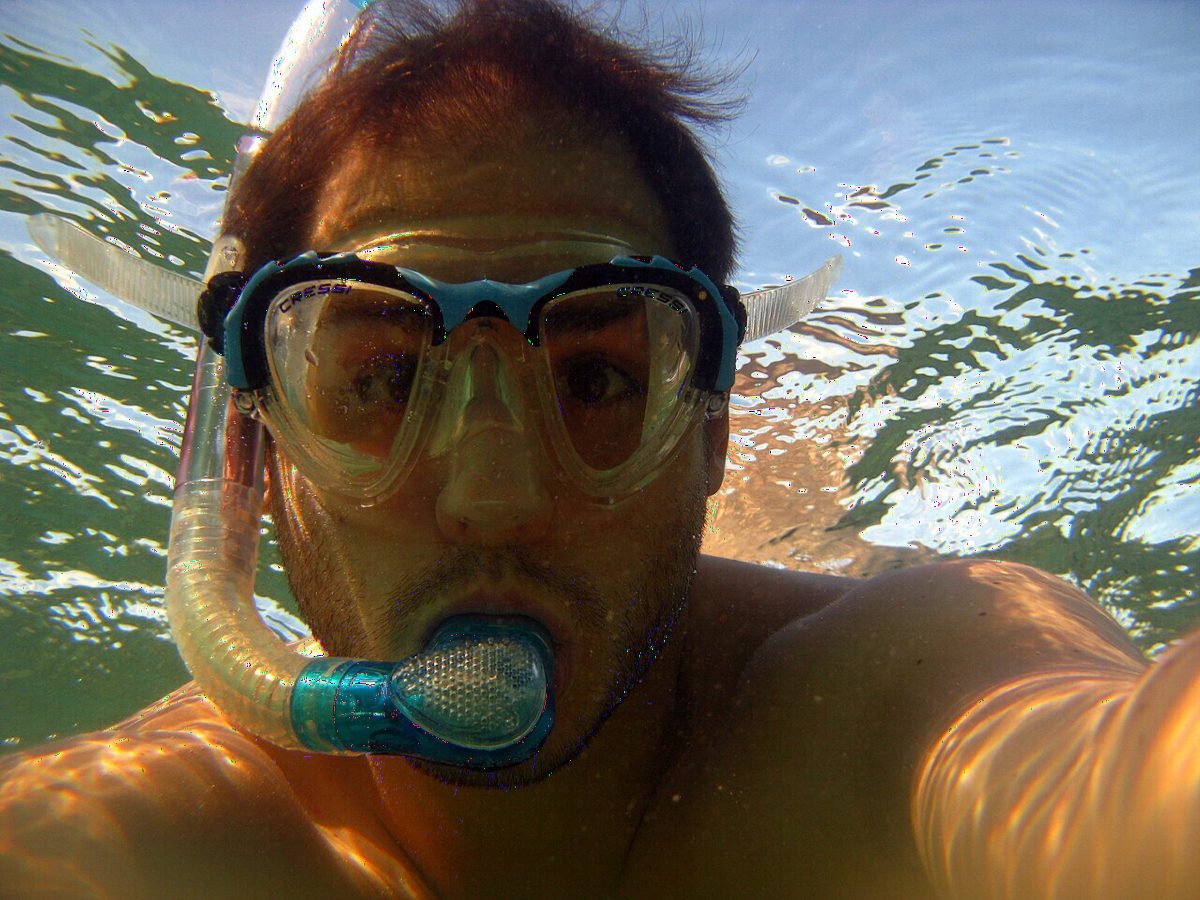
Mask and snorkel Essential
Low-volume mask
The one piece of gear that decides whether you see the fish. Small, soft, and yours: it has to fit your face, not the shop's.
Mask and snorkel Essential
The one piece of gear that decides whether you see the fish. Small, soft, and yours: it has to fit your face, not the shop's.
Prices read on 17 October 2026 from Moroccan online shops. Brands named are examples seen for sale, not a recommendation, and prices change: check before you buy. For second-hand, also look on Avito and in spearfishing groups.
All gear prices in Morocco →A mask gives your eyes an air space so they can focus underwater. Every other piece of gear can be compromised on; this one cannot, because a mask that leaks or fogs ends the dive.
For spearfishing the mask is not a scuba mask. It is a freediving mask: small internal volume, so that the air you have to blow into it to equalise as you descend is a few millilitres and not a lungful, and a low profile close to the eyes, so that you see down and to the sides without turning your head. Every metre you descend, the water squeezes the mask against your face; the smaller the volume, the less breath it costs to relieve that squeeze, and the deeper you go on the same breath.
Fit comes before everything. Hold the mask to your face without the strap, breathe in gently through your nose, and let go: a mask that fits stays on by suction alone, with no gap at the temples, the cheeks or under the nose. Do this with every mask you consider, and if you can, do it with a snorkel in your mouth, because the snorkel changes the shape of your upper lip.
What to look for once it fits:
Ignore the frame colour, the brand, and any claim about "panoramic" vision. A mask that fits is panoramic enough.
There is no size chart. Faces differ in width, in the bridge of the nose and in the distance between the eyes, and a mask that seals on one face gapes on another. The suction test decides. Narrow faces tend to fit smaller Mediterranean-style masks; wider faces need a wider skirt. Beards break the seal under the nose: a thin line of silicone grease helps, shaving the strip under the nose helps more.
A new mask has a film of mould-release agent on the inside of the lenses that makes it fog whatever you do. Burn it off with a lighter flame passed lightly over the inside of the glass until the film goes cloudy and then clear, or scrub it with toothpaste, before the first dive.
Rinse in fresh water after every dive, dry out of the sun, and store it in its box with nothing pressing on the skirt. Silicone lasts years if it is kept out of sunlight and away from fuel. Replace the strap when it cracks, and replace the mask when the skirt hardens.